


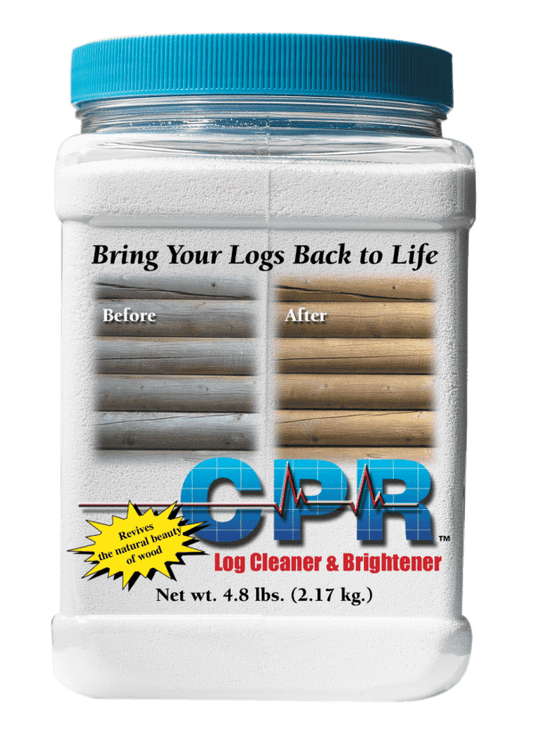
CPR - Bring Your Logs Back to Life with CPR Log Cleaner and Wood Brightener. CPR is used to clean and brighten uncoated wood that is dirty, faded or gray from UV exposure. Mix CPR to the brightening solution strength for use on new construction just prior to staining to remove dirt and grime from logs during the building process and to break down mill glaze. Mixed at the log cleaning solution strength—use for periodic cleaning of stained logs to extend the life of your stain.
One container makes 4 to 8 gallons of solution depending on cleaning strength desired.
Advantages Using CPR Log Cleaner & Brightener
- Easy to Use Mixes With Water
- Removes Mill Scale & Dirt
- Reverses the UV Effects of the Sun
- Extends the Life of Your Stain
- Mixes In Two Strengths
- Cleans 100 to 150 sq. feet per gallon.
- Can be applied with a sprayer or brush.
- Product shipping weight 6 lbs
CPR FAQS:
Why should I use CPR instead of bleach?
Oxygen bleach is significantly less environmentally harmful or dangerous than chlorine bleach or oxalic acid, yet can do an excellent job of cleaning and bleaching. While it needs to be thoroughly rinsed from any wood it is applied to (just like chlorine bleach or oxalic acid), there is far less risk of damage to coatings applied on wood that has a little oxygen bleach left in it than wood with a little chlorine bleach or oxalic acid. CPR should NOT be used on high tannin woods like Redwood, Douglas Fir, or Hemlock, as it causes severe discoloration of the wood. In addition, it will discolor some Cedar wood so should therefore be very carefully tested prior to use on a Cedar home of any kind.
NOTE: When using bleach of any kind, make sure you test a small area before proceeding with the entire project. Oxidizing chemicals can cause undesired color shifts, including tannin bleeding, in various woods. You should be prepared to use whatever cleaner or bleach will work without causing unwanted color shifts.
How do I remove water stains?
Try sanding with a 60 or 80 grit sandpaper first. Any sort of chemical can damage the wood even further and cause more discoloration. Practice your sanding technique and try to blend discolored areas into surrounding areas first. If that doesn't work, you may have to resort to chemicals that will need to be applied exactly according to directions and very thoroughly rinsed off. Try the least harsh chemical first and only resort to a very harsh chemical if the others don't work.
In order of harshness:- Sodium per carbonate (like Sashco's CPR)
- Household chlorine bleach and/or bleach and TSP mix (no stronger than a 10% solution!)
- Oxalic acid or 35% hydrogen peroxide (medical grade)
 Material Safety Data Sheet
Preparation
- Decide if you need to use the clean or brightener strength.
- Wear protective eyewear, such as safety glasses with side shields or goggles, when applying this product. Neoprene gloves and long-sleeved clothing are recommended to help protect skin. Hydrogen peroxide is released when CPR is dissolved in water, so use with good ventilation.
- Brush any dirt, loose material or other contaminants from wood surfaces to ensure that CPR makes good contact with the surface you wish to clean or brighten. Keep the solution off surfaces you do not want bleached.
- Use in warm weather, between 60° and 90°F, for best results.
*NOTE: CPR is not recommended for use on redwood or other high tannin woods. CPR may occasionally darken these woods - please test first.
Cleaner Strength
(for less severe discoloration and surface cleaning) Mix 1/2 of the container with 4 gallons of clean water in a clean 5-gallon plastic pail.
Brightener Strength
(for aggressive cleaning) Mix the entire container with 4 gallons of clean water in a clean 5-gallon plastic pail.
Mixing
Stir thoroughly until the powder is mostly dissolved (which will take a few minutes, depending on water temperature). The solution will begin to “fizz� as the powder dissolves. Not all of the powder will completely dissolve in the solution; even if all of the powder is not completely dissolved, the solution is very usable. For the best and most consistent results, the solution should be used within 4 hours.
Coverage
At either strength, solution coverage is between 100 and 150 square feet per gallon (500-750 square feet per 5 gallons), depending on the wood porosity.
Application
- Apply CPR to one wall at a time, starting at the bottom and working completely across, 2-5 logs high.
- When the bottom 2-5 logs are completely cleaned and/or brightened, then move up the wall to the next 2-5 logs.
- Continue in a similar pattern to the top of the wall.
- Work only on one small area at a time (15-25 sq. ft.) for best results. Rinse with clean water as you go.
- Apply via garden sprayer, brush or mop.
- Allow the solution to work for 5-20 minutes, keeping the surfaces wet with additional CPR solution.
- For best results, vigorously scrub the surfaces with a stiff-bristle brush to remove unsound surface wood.
- After you’ve cleaned the entire wall with the CPR solution, starting at the top, rinse the entire wall thoroughly and allow to dry before application of preservatives or stains.
- Repeat applications of CPR solution may be necessary for tougher discolorations, more severe UV damage and/or heavily weathered wood surfaces.
Warning Avoid contact with eyes and skin and do not ingest. Keep away from children and animals.
CPR - Bring Your Logs Back to Life with CPR Log Cleaner and Wood Brightener. CPR is used to clean and brighten uncoated wood that is dirty, faded or gray from UV exposure. Mix CPR to the brightening solution strength for use on new construction just prior to staining to remove dirt and grime from logs during the building process and to break down mill glaze. Mixed at the log cleaning solution strength—use for periodic cleaning of stained logs to extend the life of your stain.
One container makes 4 to 8 gallons of solution depending on cleaning strength desired.
Advantages Using CPR Log Cleaner & Brightener
- Easy to Use Mixes With Water
- Removes Mill Scale & Dirt
- Reverses the UV Effects of the Sun
- Extends the Life of Your Stain
- Mixes In Two Strengths
- Cleans 100 to 150 sq. feet per gallon.
- Can be applied with a sprayer or brush.
- Product shipping weight 6 lbs
CPR FAQS:
Why should I use CPR instead of bleach?
Oxygen bleach is significantly less environmentally harmful or dangerous than chlorine bleach or oxalic acid, yet can do an excellent job of cleaning and bleaching. While it needs to be thoroughly rinsed from any wood it is applied to (just like chlorine bleach or oxalic acid), there is far less risk of damage to coatings applied on wood that has a little oxygen bleach left in it than wood with a little chlorine bleach or oxalic acid. CPR should NOT be used on high tannin woods like Redwood, Douglas Fir, or Hemlock, as it causes severe discoloration of the wood. In addition, it will discolor some Cedar wood so should therefore be very carefully tested prior to use on a Cedar home of any kind.
NOTE: When using bleach of any kind, make sure you test a small area before proceeding with the entire project. Oxidizing chemicals can cause undesired color shifts, including tannin bleeding, in various woods. You should be prepared to use whatever cleaner or bleach will work without causing unwanted color shifts.
How do I remove water stains?
Try sanding with a 60 or 80 grit sandpaper first. Any sort of chemical can damage the wood even further and cause more discoloration. Practice your sanding technique and try to blend discolored areas into surrounding areas first. If that doesn't work, you may have to resort to chemicals that will need to be applied exactly according to directions and very thoroughly rinsed off. Try the least harsh chemical first and only resort to a very harsh chemical if the others don't work.
In order of harshness:- Sodium per carbonate (like Sashco's CPR)
- Household chlorine bleach and/or bleach and TSP mix (no stronger than a 10% solution!)
- Oxalic acid or 35% hydrogen peroxide (medical grade)
Preparation
- Decide if you need to use the clean or brightener strength.
- Wear protective eyewear, such as safety glasses with side shields or goggles, when applying this product. Neoprene gloves and long-sleeved clothing are recommended to help protect skin. Hydrogen peroxide is released when CPR is dissolved in water, so use with good ventilation.
- Brush any dirt, loose material or other contaminants from wood surfaces to ensure that CPR makes good contact with the surface you wish to clean or brighten. Keep the solution off surfaces you do not want bleached.
- Use in warm weather, between 60° and 90°F, for best results.
*NOTE: CPR is not recommended for use on redwood or other high tannin woods. CPR may occasionally darken these woods - please test first.
Cleaner Strength
(for less severe discoloration and surface cleaning) Mix 1/2 of the container with 4 gallons of clean water in a clean 5-gallon plastic pail.
Brightener Strength
(for aggressive cleaning) Mix the entire container with 4 gallons of clean water in a clean 5-gallon plastic pail.
Mixing
Stir thoroughly until the powder is mostly dissolved (which will take a few minutes, depending on water temperature). The solution will begin to “fizz� as the powder dissolves. Not all of the powder will completely dissolve in the solution; even if all of the powder is not completely dissolved, the solution is very usable. For the best and most consistent results, the solution should be used within 4 hours.
Coverage
At either strength, solution coverage is between 100 and 150 square feet per gallon (500-750 square feet per 5 gallons), depending on the wood porosity.
Application
- Apply CPR to one wall at a time, starting at the bottom and working completely across, 2-5 logs high.
- When the bottom 2-5 logs are completely cleaned and/or brightened, then move up the wall to the next 2-5 logs.
- Continue in a similar pattern to the top of the wall.
- Work only on one small area at a time (15-25 sq. ft.) for best results. Rinse with clean water as you go.
- Apply via garden sprayer, brush or mop.
- Allow the solution to work for 5-20 minutes, keeping the surfaces wet with additional CPR solution.
- For best results, vigorously scrub the surfaces with a stiff-bristle brush to remove unsound surface wood.
- After you’ve cleaned the entire wall with the CPR solution, starting at the top, rinse the entire wall thoroughly and allow to dry before application of preservatives or stains.
- Repeat applications of CPR solution may be necessary for tougher discolorations, more severe UV damage and/or heavily weathered wood surfaces.
Warning Avoid contact with eyes and skin and do not ingest. Keep away from children and animals.